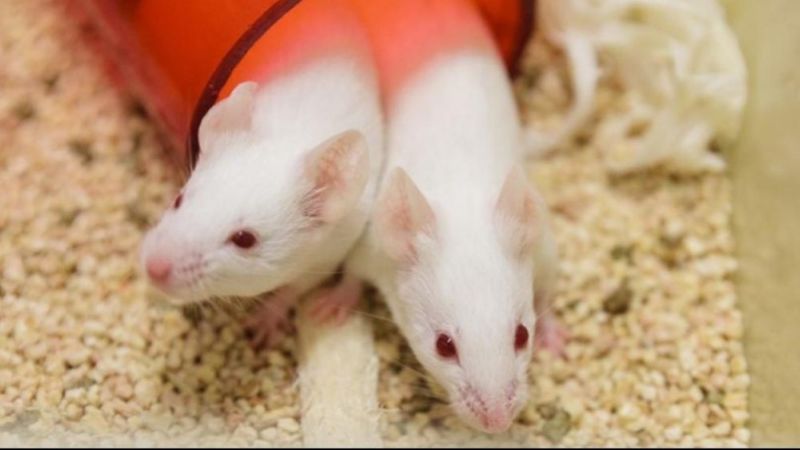
Being born in winter could make your long-term biological clock tick slower, according to a new study on mice.
An enzyme responsible for making pain last after nerve injury has been discovered in mice.
More than 50 top scientists working in Germany and Switzerland have launched a new Declaration about animal research.
The Scientist reported on its top ten life-science innovations for 2010 this week.
By removing a protein that muscles use to convert fuel into energy, the researchers produced a mouse with normal body weight but which did not have enough energy to exercise.
Our attention was drawn this week to a relatively new European initiative called AXLR8, a consortium which aims to accelerate progress in developing alternatives to animals for safety testing.
Premature ageing can be reversed in mice, hinting at the possibility of anti-aging treatments for humans.
The HIV & AIDS page on our partner website AnimalResearch.info has been updated to mark World AIDS Day on 1 December.
Understanding Animal Research today (Tuesday 30 November) welcomed a report from the Home Office addressing claims by an animal rights group about animal research and testing at a UK facility in 2009.
The new European Directive 2010/63/EU on animal experimentation has been finalised.
In this short interview with Dr Simon Festing, we hear his response to questions such as: Why is their so much secrecy in animal research?
Nerve cells made from a person's own skin suggest a novel way to treat spinal injury.
An Understanding Animal Research Oceania guide for families and young people
Get the latest articles and news from Understanding Animal Research in your email inbox every month. For more information, please see our privacy policy.